
Unlocking your body’s potential for explosive movement isn’t just for elite athletes; it’s a fundamental aspect of human performance that impacts everything from chasing down a bus to dominating on the sports field. Developing fitness speed means cultivating your ability to move your body or a body part quickly and efficiently, a skill that translates into greater power, agility, and overall athletic prowess, making daily life feel more dynamic and your chosen activities more exhilarating. This isn’t just about how fast you can run a straight line; it encompasses reaction time, acceleration, and the crucial ability to change direction on a dime.
Imagine feeling lighter on your feet, reacting quicker to unexpected situations, or simply outperforming your previous bests with ease. Enhancing your fitness speed can dramatically improve your quality of life, boost confidence in your physical capabilities, and significantly reduce the risk of injuries by strengthening the muscles and neural pathways responsible for rapid, controlled movement. It’s about building a more responsive, resilient, and powerful you, ready for whatever life throws your way.
What Even Is Fitness Speed, Anyway? It’s More Than Just Running Fast!
When we talk about “speed” in fitness, most people instantly picture Usain Bolt sprinting down a track. While that’s certainly a prime example, fitness speed is actually a much broader concept. It’s your body’s ability to move from point A to point B in the shortest amount of time, but it’s broken down into several key components:
- Reaction Time: How quickly you respond to a stimulus (like a starting gun or an opponent’s move).
- Acceleration: Your ability to rapidly increase your velocity from a standstill or slow pace. This is where you build initial momentum.
- Maximum Velocity: The top speed you can reach and maintain for a short period.
- Agility: The capacity to change direction quickly and efficiently while maintaining balance and control. This is crucial in almost every sport and many daily activities.
- Deceleration: Often overlooked, but critical! The ability to slow down rapidly and under control, which is essential before changing direction or stopping safely.
Think of it this way: a sprinter needs incredible acceleration and max velocity. A basketball player needs amazing agility and reaction time. A soccer player needs all of the above, plus the ability to decelerate and re-accelerate constantly. Understanding these different facets helps us tailor our training for maximum impact.
Why Bother Chasing Speed? The Real-World Payoff!
You might be thinking, “I’m not an athlete, why do I need to be faster?” Great question! The benefits of enhanced fitness speed extend far beyond competitive sports:
- Better Performance in Sports & Hobbies: Whether it’s tennis, soccer, hiking, or even just playing tag with your kids, being faster and more agile gives you a distinct advantage and makes activities more enjoyable.
- Reduced Injury Risk: By strengthening the muscles and connective tissues involved in rapid movement, and improving your body’s ability to react and stabilize, you become more resilient to twists, falls, and sudden impacts.
- Improved Daily Function: Ever had to rush for a train, catch something falling, or quickly step out of the way of something? Enhanced speed and agility make these everyday scenarios easier and safer.
- Increased Power & Strength: Speed training inherently builds explosive power, which translates to greater overall strength in many movements.
- Boosted Metabolism: High-intensity speed work, like sprints, is fantastic for burning calories and improving cardiovascular health.
- Mental Sharpness: The quick decision-making and focus required for speed drills can actually sharpen your cognitive function.
So, while you might not be aiming for the Olympics, becoming a little faster and more agile can significantly upgrade your life.
The Building Blocks of Blazing Speed: It’s More Than Just Sprinting!
To truly enhance your speed, you need a multi-faceted approach. It’s not just about running; it’s about building a strong, powerful, and responsive body.
1. Strength Training: The Foundation of Power
You can’t be fast if you’re not strong. Strength training, particularly focusing on explosive power, is non-negotiable. Think of your muscles as engines; strength training builds bigger, more efficient engines.
- Lower Body Power: Exercises like squats (especially jump squats), deadlifts, lunges, and step-ups are crucial. Focus on moving the weight with intent and speed, even if the weight is heavy.
- Core Strength: A strong core (abs, obliques, lower back) acts as the transfer station for power between your upper and lower body. Planks, Russian twists, and medicine ball throws are excellent.
- Upper Body Contribution: While less direct, a powerful arm drive is vital for sprinting. Push-ups, overhead presses, and rows contribute to this.
Key Tip: Don’t just lift heavy; lift explosively. For speed, prioritize movements that mimic athletic actions.
2. Plyometrics: Unleashing Your Inner Spring
Plyometric exercises are all about explosive jumping and bounding movements that teach your muscles to produce maximum force in minimal time. They train your nervous system to fire more rapidly and efficiently.
- Box Jumps: Jump onto a sturdy box, landing softly. Focus on quick ground contact and powerful take-offs.
- Broad Jumps: Jump as far forward as you can from a standing start.
- Depth Jumps: Step off a low box, and as soon as your feet hit the ground, immediately jump as high as possible. This utilizes the stretch-shortening cycle.
- Bounding: Exaggerated, long strides that emphasize air time and powerful leg drive, often done over distances.
- Medicine Ball Throws: Overhead throws, rotational throws, and chest passes can develop upper body and core power for arm drive.
Remember: Plyometrics are high-impact. Start with low reps, perfect your form, and ensure adequate rest between sets.
3. Sprinting Drills: Perfecting Your Mechanics
Directly practicing sprinting is essential. This is where you apply your strength and power to actual movement, focusing on technique.
- Acceleration Drills:
- Falling Starts: Lean forward until you feel like you’re about to fall, then sprint out. Teaches forward lean and powerful drive.
- Push-Up Starts/Seated Starts: Start from a compromised position to practice rapid acceleration.
- Resistance Sprints: Sprinting with a light resistance (like a parachute or sled) builds power in the initial push-off.
- Max Velocity Drills:
- Flying Sprints: Sprint a short distance (e.g., 20-30m) at sub-maximal speed, then transition into a full-speed sprint for another 30-60m. This helps maintain top speed.
- Stride Outs: Longer, controlled sprints at 80-90% effort to work on mechanics without full fatigue.
- Form Focus: Pay attention to arm drive (powerful, piston-like motion), knee drive (knees high), and foot strike (landing under your hips, not out in front).
4. Agility & Change of Direction (COD) Drills: Mastering Your Movements
Agility drills improve your ability to accelerate, decelerate, and re-accelerate in different directions.
- Cone Drills:
- T-Drill: Sprint forward, shuffle sideways, backpedal, shuffle sideways.
- L-Drill: Sprint, cut, sprint, cut.
- Box Drill: Sprint around a square of cones.
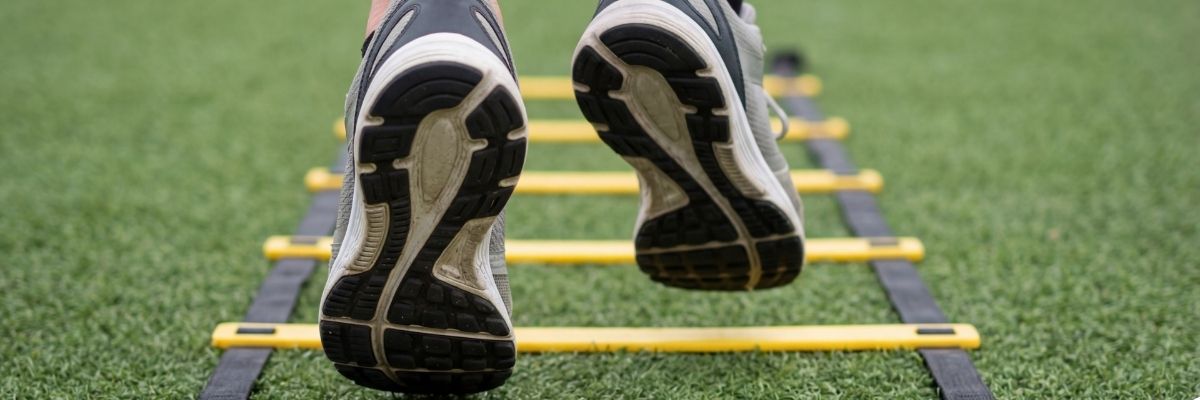
- Ladder Drills: Using an agility ladder on the ground, perform various footwork patterns (e.g., in-out, icky shuffle) to improve quickness and coordination.
- Reactive Drills: Have a partner point in a direction or call out a color, and react instantly. This trains your reaction time.
Pro Tip: Agility isn’t just about moving fast; it’s about moving efficiently with control. Don’t sacrifice form for speed initially.
Crafting Your Speed-Boosting Workout: A Sample Routine Idea!
Building speed isn’t something you do every single day. It requires significant effort and recovery. Aim for 2-3 dedicated speed sessions per week, allowing at least 48 hours of recovery between them.
Before Anything Else: The Dynamic Warm-Up (Crucial!)
Never skip this! A good warm-up prepares your muscles and nervous system.
- Light cardio (5-10 mins): Jogging, jumping jacks.
- Dynamic stretches: Leg swings, arm circles, walking lunges, high knees, butt kicks, Frankenstein walks.
- Activation drills: Glute bridges, bird-dog.
Sample Speed Training Session (Example):
-
Dynamic Warm-Up (10-15 minutes)
- Focus: Get warm, mobile, and activate key muscles.
-
Plyometrics (15-20 minutes)
- Box Jumps: 3 sets of 5 reps (focus on powerful take-off, soft landing)
- Broad Jumps: 3 sets of 4 reps (max distance)
- Medicine Ball Slams (overhead): 3 sets of 6 reps (explosive core power)
- Rest: 60-90 seconds between sets. Prioritize quality over quantity.
-
Sprinting & Agility Drills (20-25 minutes)
- Falling Starts: 4 sets of 10-15 meter sprints (full effort)
- T-Drill: 3 sets (focus on quick changes of direction)
- Flying Sprints: 3 sets of (20m build-up + 30m max sprint)
- Rest: 2-3 minutes between sprint sets, 60-90 seconds between agility sets. Full recovery is key for maximal effort.
-
Cool-Down (5-10 minutes)
- Light jog or walk.
- Static stretches: Hold each stretch for 20-30 seconds (hamstrings, quads, hip flexors, calves).
Integrating Strength Training:
You can do your speed work on separate days from your main strength training, or if combining, do speed work before heavy lifting. Speed work demands fresh muscles and a fresh nervous system. A common split might be:
- Monday: Full Body Strength
- Tuesday: Speed & Agility
- Wednesday: Active Recovery / Rest
- Thursday: Full Body Strength
- Friday: Speed & Plyometrics
- Saturday/Sunday: Rest / Light Activity
Don’t Forget the Secret Sauce: Recovery & Fueling Your Engine!
Speed training is demanding. You break down muscle tissue and tax your nervous system. Without proper recovery and nutrition, you won’t see results and risk injury.
- Prioritize Sleep: Aim for 7-9 hours of quality sleep per night. This is when your body repairs and rebuilds.
- Active Recovery: Light walks, foam rolling, or gentle stretching on off days can aid blood flow and reduce soreness.
- Hydration: Drink plenty of water throughout the day, especially before, during, and after workouts.
- Fuel Your Body:
- Protein: Essential for muscle repair and growth. Include sources like lean meats, fish, eggs, dairy, and legumes.
- Carbohydrates: Your primary energy source for high-intensity activities. Opt for complex carbs like whole grains, fruits, and vegetables.
- Healthy Fats: Important for hormone production and overall health. Avocados, nuts, seeds, and olive oil are great choices.
- Timing: Consume a balanced meal or snack with protein and carbs within an hour or two after your speed sessions to kickstart recovery.
Putting It All Together: Consistency is Your Best Friend!
Developing speed is a journey, not a sprint (pun intended!). Consistency in your training, along with gradual progression, is paramount. Don’t try to do too much too soon. Start with foundational movements, focus on perfect form, and slowly increase intensity, volume, or complexity. Listen to your body; if something hurts, stop and assess.
The goal isn’t just to be fast, but to be fast safely and sustainably. Enjoy the process of becoming a more agile, powerful, and responsive version of yourself!
Frequently Asked Questions
Q: How often should I train for speed?
A: Aim for 2-3 dedicated speed sessions per week, allowing at least 48 hours of recovery between intense workouts.
Q: Can beginners train for speed?
A: Absolutely! Start with foundational strength, basic plyometrics, and focus on proper running mechanics before progressing to more complex drills.
Q: What equipment do I need for speed training?
A: Minimal equipment is needed: cones, an agility ladder, and possibly a jump box are great, but many drills can be done with just open space.
Q: Is speed training just for athletes?
A: No, enhanced speed and agility benefit everyone by improving daily movement, reducing injury risk, and boosting overall fitness.
Q: How long until I see results?
A: You might notice improvements in coordination and quickness within a few weeks, with significant changes in speed typically taking 8-12 weeks of consistent training.
Q: Should I do speed training before or after strength training?
A: Always perform speed and power training before heavy strength training in the same session, as it requires a fresh nervous system for maximal effort.
Embracing fitness speed training empowers you to move with greater power, agility, and confidence in all aspects of life. By consistently incorporating explosive movements and proper recovery, you’ll unlock a more dynamic and resilient you.